
New mass spectrometry technique captures low-abundance molecules
Original story from Cold Spring Harbor Laboratory (NY, USA).
A new mass spectrometry technique sorts molecules to capture those of lower abundance.
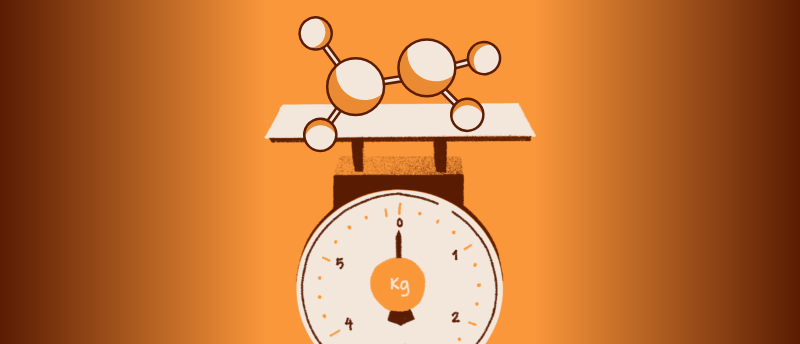
For scientists, a molecule’s weight can help determine its makeup. For measures like this, researchers turn to a technique called mass spectrometry. Mass spectrometry measures molecular weight by injecting ions through a chamber and timing how long it takes each one to reach a sensor. Imagine throwing a tennis ball and a medicine ball at a wall. You can determine their weight based on how fast they accelerate and how long it takes them to reach the wall.
“A mass spectrometer is essentially a very precise scale,” commented Cold Spring Harbor Laboratory (NY, USA; CSHL) Research Associate Professor Paolo Cifani. “Imagine a bucket full of different molecules. Using mass spectrometry, you can figure out what molecules and how many are in that bucket. This enables researchers to try to answer questions like, ‘Are there different proteins, lipids, or other small molecules in one tumor versus another?’”
Now, Cifani and his team at CSHL’s Mass Spectrometry facility have developed a new technique to push the performance of their instruments. Their innovation may improve drug target discovery while helping scientists answer long-standing questions about human health and biology.
 Harnessing mass spectrometry imaging to generate lipid maps
A new microfluidic method preserves worm anatomy to link lipid signals with body structure using mass spectrometry imaging.
When trying to identify molecules in complex mixtures, mass spectrometer sensitivity was thought to be determined almost exclusively by speed. Typical scans involve transferring molecules to a gaseous state. Their ions are then measured in sequence by taking ‘snapshots’ inside the ‘bucket’ every few seconds. However, if too many ions accumulate, they can start interacting, which messes up the scan. So, “it seems intuitive that the faster you go, the more you can sequence,” Cifani noted.
“Speed is always a factor,” he explained. “But potentially interesting molecules can be overlooked because they’re not seen in the snapshot, as the spectrometer gets ‘blinded’ by more abundant ions. Our new technique looks to remedy that.”
Cifani likens it to a sorting system. Rather than measuring everything in the chamber at once, the Cifani lab breaks scans down into ‘bins’. If there’s a molecule at much higher levels, it only fills one bin, not the others.
“Our method is much better at measuring differences in concentration,” he shared. “That’s very important when studying a drug versus a placebo.”
The lab is now working to refine and expand access to their new technique. Many CSHL core facilities offer technical expertise not only to researchers at the Laboratory but also to other institutions. Cifani and his team are confident their technique will be valuable to the scientific community. “This is a proof of concept,” he concluded. “We’re ready to inspire discovery, worldwide.”
This article has been republished from the following materials. Material may have been edited for length and house style. For further information, please contact the cited source. Our press release publishing policy can be accessed here.