
Tooth whitening without enamel damage? Vibration-activated powder protects pearly whites for better oral health
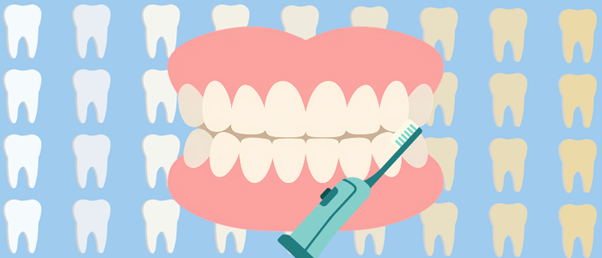
Teeth-whitening powder activated by an electric toothbrush brightens smiles while also offering mineral repair, cavity prevention and long-term maintenance of oral health.
Scientists from Shanghai Xuhui District Stomatological Hospital (China) and the Chinese Academy of Sciences (Beijing, China) have developed a teeth-whitening powder activated by the vibrations of an electric toothbrush, which not only brightens, but also protects, teeth.
Teeth are easily stained; activities like drinking tea and coffee, eating certain foods and smoking can all dull the sparkle of our pearly whites, meaning there is a growing demand for effective teeth whitening solutions. Traditionally, these take the form of peroxide-based bleaching products, including strips, gels and mouth rinses, which remove stains but pose safety risks due to their strong oxidizing action.
This type of chemical whitening generates reactive oxygen species to brighten teeth, but this can also result in enamel demineralization, soft tissue irritation and, potentially, microbial imbalance. It is also not optimal for at-home use, as application often requires specialized equipment and professional oversight. A more convenient and less destructive alternative is therefore required to leave smiles gleaming and safeguard oral health.
In pursuit of this goal, researchers have designed a whitening strategy that combines strontium and calcium ions with barium titanate – Ba0.9Sr0.05Ca0.05TiO3 or BSCT. The solution is heated to form a ceramic powder that, when vibrated – such as by an electric toothbrush, exhibits piezoelectric catalysis, which generates reactive oxygen species. These degrade organic dyes and inhibit bacterial activity. Moreover, the calcium and strontium ions released from BSCT promote the remineralization of enamel and dentin by forming ion-enriched zones.
 Oral bacterium could drive breast cancer growth and spread
Study finds Fusobacterium nucleatum can drive DNA damage, tumor growth and metastasis, with heightened effects in cells with BRCA1 gene mutations.
Initial lab tests using artificially stained human teeth revealed that BSCT caused visible whitening after 4 hours of brushing with an electric toothbrush, compared to a control group brushed with saline. After 12 hours, the BSCT-treated teeth were almost 50% whiter.
The researchers also tested their innovative whitening treatment on rats fed a high-sugar diet. Brushing with BSCT for 1 minute a day for 4 weeks was associated with a restored oral microbiome, eliminated periodontitis-causing Porphyromonas gingivalis and Staphylococcus aureus bacteria, and reduced inflammation.
Mechanistically, they revealed that the piezoelectric polarization field generated by BSCT enhances antibacterial efficacy by disrupting bacterial membrane potential and structural integrity, therefore weakening the proton motive force and inhibiting ATP synthesis.
By combining whitening with remineralization and microbial community regulation, this could be a sought-after breakthrough in at-home tooth whitening, although it hasn’t been tested in a toothpaste formula just yet.
“This work offers a safe, at-home teeth whitening strategy integrating whitening, enamel repair and microbiome balance for long-term oral health,” concluded Min Xing, first author on the study.