
Cholera toxin combats colorectal cancer growth
Original story from Umeå University (Sweden).
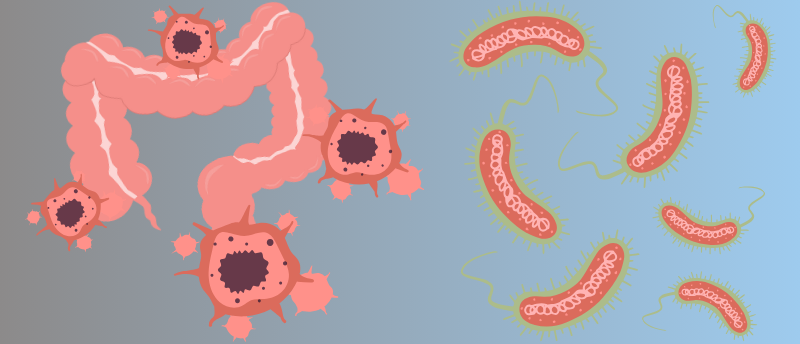
A toxin secreted by cholera bacteria can inhibit the growth of colorectal cancer without causing any measurable damage to the body.
This is shown by a new study by researchers at Umeå University (Sweden). Systemic administration of the purified bacterial substance changes the immune microenvironment in tumors, and the results may lead the way for research into a new type of cancer treatment.
“The substance not only kills cancer cells directly. It reshapes the tumor environment and helps the immune system to work against the tumor without damaging healthy tissue,” explained Sun Nyunt Wai, professor at Umeå University and one of the lead authors behind the study.
Colorectal cancer, i.e. cancer of the colon and rectum, is the third most common form of cancer in the world and the cancer with the second highest mortality rate globally. Today, cancer is usually treated with surgery, radiation or chemotherapy. While effective in many cases, those methods have significant side effects. Colorectal cancer is also increasing in the world. Therefore, it is valuable to find alternative treatment methods.
The researchers in Umeå have studied the cancer-inhibiting properties of the purified substance MakA, a so-called cytotoxin secreted by the cholera bacterium Vibrio cholerae. In experiments with mice, it was possible to see that systemic administration of MakA significantly reduced the growth of the tumors.
The substance accumulated specifically in the tumor tissue, where it increased cell death of tumor cells and reduced their ability to increase in number. In parallel, MakA changed the composition of the cellular environment in tumors and increased the number of innate immune cells, especially macrophages and neutrophils, which in turn contributed to inhibiting tumor growth.
Could this marine pathogen hold the key to cancer immunotherapy?
A marine bacterium that selectively targets tumor cells with minimal systemic toxicity could represent the next big thing in cancer immunotherapy.
The treatment did not lead to any harmful inflammation in mice. No adverse effects on body weight, general health or the function of vital organs could be seen, even after repeated dosing. This suggests that the effect of MakA is local and specifically targeted at tumors.
Further analyses confirmed that MakA stimulated the formation of so-called immune mediators in the tumor that promote cell death while maintaining regulatory mechanisms that limit damage to surrounding tissue.
“Although more research is needed, the results clearly show an interesting path for developing a new type of cancer treatment, which utilizes substances that bacteria create to both kill cancer cells and strengthen the body’s own defences,” reported Saskia Erttmann, one of the lead authors behind the study.
The researchers emphasize that more studies are needed to explore the anti-cancer potential of MakA in other models as well as to assess its suitability for future clinical use.
This article has been republished from the following materials. Material may have been edited for length and house style. For further information, please contact the cited source. Our press release publishing policy can be accessed here.