
HIF1: the molecule causing your tendon pain
Original story from ETH Zurich (Switzerland).
An important molecular mechanism that triggers tendon problems has been identified, paving the way for new treatment options.
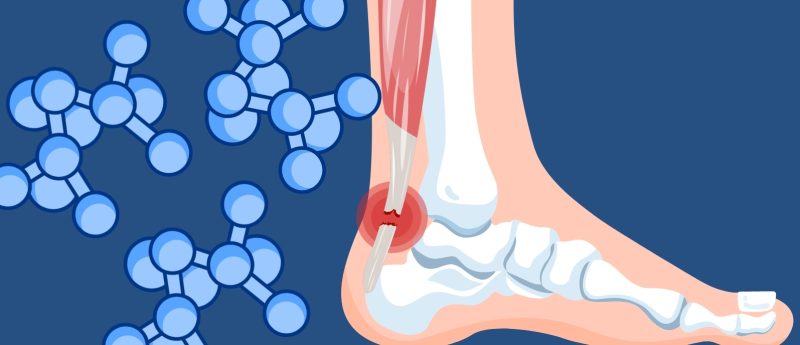
Complaints such as pain in the Achilles tendon, tennis elbow, swimmer’s shoulder and jumper’s knee are familiar to many young sportspeople, as well as older individuals. These conditions are all caused by overloading of tendons and are generally very painful.
“Tendons are fundamentally susceptible to overuse,” explained Jess Snedeker, a professor of orthopedic biomechanics at ETH Zurich and Balgrist University Hospital in Zurich (both Switzerland). “They must withstand powerful loads, with all the forces of our muscles being concentrated to the relatively thin tendons that transmit these forces into movement of our skeleton.”
In medical terms, the aforementioned conditions are known as tendinopathies. They are some of the most frequent conditions seen by orthopedic specialists, but treatment options are extremely limited. Although physiotherapy can help, there are many serious cases for which this treatment does not achieve much. Scientists are therefore keen to research these tendon problems in greater depth with a view to developing effective treatments.
 The benefits of exercise on a molecular level
A protein that plays a key role in mediating the health benefits of exercise has been discovered.
Not just correlation – causation
Now, a team of researchers led by Snedeker and Katrien De Bock, professor of exercise and health at ETH Zurich, has reached a new milestone. In the HIF1 protein, they have identified a central molecular driver of tendon problems of this kind. A part of HIF1 acts as a transcription factor, which controls the activity of genes in cells.
This protein was already known to be present at elevated levels in diseased tendons. However, it was unclear whether the increase was simply a concomitant phenomenon or whether the conditions are actually triggered by the protein. In experiments in mice and with tendon tissue from humans, the team of researchers has now shown the latter to be the case.
Treatment before it is too late
In mouse experiments, the researchers either activated the HIF1 protein permanently or switched it off completely. Whereas they observed tendon disease even without overloading in the mice with permanently activated HIF1, no tendon disease occurred in the mice if HIF1 was deactivated in tendons, even in the case of overloading.
Both in the mice and in the experiments with human tendon cells, which the researchers obtained from tendon surgeries at the hospital, they were able to show that elevated HIF1 levels in the tissue leads to a pathogenic remodeling of the tendons: more crosslinks form within the collagen fibers that make up the basic structure of the tendons.
“This makes the tendons more brittle and impairs their mechanical function,” explained Greta Moschini, a doctoral student in De Bock and Snedeker’s groups and lead author of the study. “This could be the explanation for the pain commonly observed in tendinopathy.”
“Our study not only provides new insight into how the disease develops. It also shows that it’s important to treat tendon problems early,” shared Snedeker. He is thinking particularly of young athletes, who frequently struggle with tendinopathies. In these cases, it is often still possible to treat the problems. “However, the damage caused by HIF1 in tendon tissue can accumulate and become irreversible over time. Physiotherapy then no longer helps, and the only treatment at this moment is to surgically remove the diseased tendon.”
A starting point to search for treatments
The fact that HIF1 has now been identified as a molecular driver raises the question whether it is possible to develop medicines that deactivate HIF1 and therefore can prevent or cure tendon disease. It is not quite that easy, explained De Bock. In many organs of the body, HIF1 is responsible for detecting a lack of oxygen (hypoxia) and activating a physiological adaptation. “Switching HIF1 off throughout the body would likely lead to side effects,” she cautioned.
It may be possible to look for methods that specifically deactivate HIF1 only in the tendon tissue. In De Bock’s view, however, the more promising approach would be to explore the biochemical processes around HIF1 in the cells in greater detail. This could help to identify other molecules that are influenced or controlled by HIF1, which might be more suitable targets for the treatment of tendinopathy. The researchers will now embark on precisely that search.
This article has been republished from the following materials. Material may have been edited for length and house style. For further information, please contact the cited source. Our press release publishing policy can be accessed here.