
World’s first AI-based optical diagnostic platform offers hope for rare disease diagnosis
Original story from Sungkyunkwan University (Seoul, South Korea).
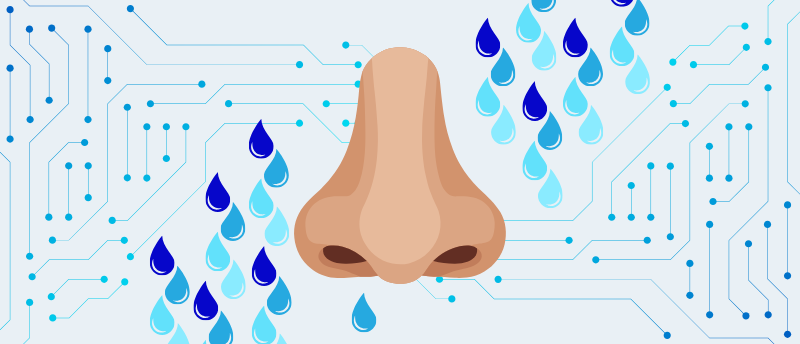
The world’s first AI-based optical diagnostic platform can distinguish nasal secretion from cerebrospinal fluid, offering potential for near-instant diagnosis of CSF rhinorrhea.
A research team led by Jinsung Park of the Department of Biomechatronics Engineering (co-first authors: Eugene Park, Hyunjun Park, Woochang Kim) of Sungkyunkwan University (Seoul, South Korea) has developed the world’s first AI-based optical diagnostic platform through a collaborative study with Minhee Kang of the Biomedical Engineering Research Center at Samsung Medical Center (Seoul, South Korea) and Gwanghui Ryu’s Otolaryngology team. This platform enables rapid and accurate differentiation – within minutes – between ordinary nasal secretion and cerebrospinal fluid (CSF) leaking from the nose.
CSF is a vital liquid that circulates around the brain and spinal cord, protecting them from external shocks. However, due to head trauma, aging or transnasal brain surgery, CSF can leak through the nasal cavity – a condition known as CSF rhinorrhea. Because leaked CSF appears as a clear, water-like fluid, it is visually indistinguishable from normal nasal secretion. As a result, many patients mistakenly attribute the symptom to rhinitis or a common cold and delay treatment, allowing bacteria to enter the brain and potentially cause life-threatening complications such as meningitis.
To address this challenge, Professor Park’s team focused on Raman spectroscopy, an analytical technique that reads the molecular ‘fingerprints’ of substances through light scattering. The researchers fabricated nanoscale pillar structures composed of gold and silver, dramatically amplifying the weak signals of various biomolecules in liquid samples by tens of thousands of times. By integrating AI-based machine learning, the system was trained to autonomously learn and distinguish the distinct spectral patterns of CSF and nasal secretions.
How will AI-first drug design transform human health?
AlphaFold’s impact on the research world has been astronomical. Learn just how paradigm-shifting an AI-first drug discovery company working side by side with AlphaFold can be.
When evaluated using clinical samples from patients at Samsung Medical Center, the platform achieved an exceptionally high diagnostic accuracy of 90.8% in identifying CSF leakage. Notably, the researchers introduced a specialized calibration algorithm to overcome variations in spectral resolution across different Raman instruments. As a result, the platform delivered equally accurate performance not only on high-end hospital equipment but also on compact, portable devices. This advancement suggests the potential for near-instant diagnosis within approximately 1 minute even in emergency rooms or small outpatient clinics.
By presenting the world’s first AI-based optical diagnostic platform capable of distinguishing visually indistinguishable nasal secretion and CSF, this study overcomes a long-standing limitation in the immediate clinical confirmation of CSF leakage. The proposed technology is expected to serve as a reliable monitoring and diagnostic platform for patients suspected of CSF rhinorrhea in real-world medical settings.
This article has been republished from the following materials. Material may have been edited for length and house style. For further information, please contact the cited source. Our press release publishing policy can be accessed here.