
Cryo-EM reveals new aspects of CRISPR-Cas biology
Original story from Vilnius University (Lithuania).
A recent study utilizing cryo-EM advances our understanding of how bacterial immune systems function and reveals new aspects of CRISPR-Cas biology.
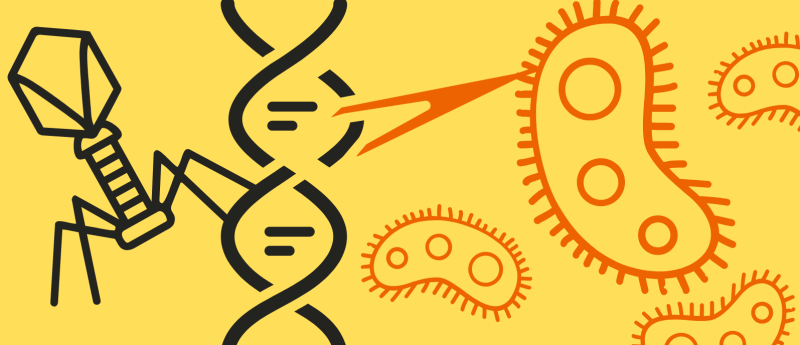
Researchers at Vilnius University (Lithuania) have uncovered how the bacterial protein Cas9, better known as the CRISPR-Cas gene scissors, helps bacteria integrate fragments of DNA from infecting viruses (bacteriophages) into their genome, thereby acquiring resistance to viral attacks.
The mechanism behind bacterial immune memory
According to Giedrius Sasnauskas, co-corresponding author, CRISPR-Cas systems are among the best-studied bacterial defense mechanisms against bacteriophages. Their activity is generally divided into three stages: adaptation, formation of virus-targeting RNA and interference. “Most discussions focus on the final stage, when a Cas protein recognizes and cleaves viral DNA. However, the first step – adaptation – is no less important, as this is when the bacterium initially acquires information about the invader,” remarked the researcher.
“During adaptation, a roughly 30–base pair fragment of viral DNA – called a spacer – is inserted into a specific region of the bacterial genome known as the CRISPR locus. This effectively allows the bacterium to ‘remember’ the attacker. Later, CRISPR RNA (crRNA) is transcribed from this region and, together with Cas proteins, forms a surveillance complex. If the same virus infects the cell again, this complex recognizes the matching nucleic acid sequence and cleaves it. This is essentially a form of bacterial immune memory that enables rapid and precise recognition of previously encountered viruses,” clarified Sasnauskas.
Cas9: more than gene scissors
“Until now, Cas9 has primarily been associated with DNA cleavage. Our research shows that this protein also plays an active role in the early stage of the bacterial immune response – in the selection and acquisition of new genetic memory elements,” noted PhD student Ugnė Gaižauskaitė.
“The study revealed that, together with Cas1-Cas2 (the proteins responsible for inserting DNA fragments) and an auxiliary protein Csn2, Cas9 forms what researchers describe as a ‘supercomplex’. This protein–nucleic acid complex selects an appropriate fragment of viral DNA – the future spacer – and facilitates its integration into the CRISPR locus,” she explained.
According to Gaižauskaitė, the findings provide new insight into how Cas9 has evolved to perform multiple functions: “We see that the same protein can serve different purposes: both defending against viruses and contributing to the formation of immune memory.”
 CRISPR vs superbugs: new genetic technology dismantles antibiotic resistance in bacteria
A novel CRISPR-based technology can spread within bacterial populations to eliminate antibiotic resistance.
Structural studies reveal the details of the mechanism
Much of the insight into this process came from cryogenic electron microscopy (cryo-EM) studies conducted using the Glacios Cryo-TEM microscope.
Using this microscope, the researchers determined 11 distinct CRISPR-Cas protein complex structures, including three variants of the supercomplex. Each structure comprises more than ten protein and nucleic acid components.
The structural analysis enabled the team to propose a detailed mechanism for selecting and integrating new spacers. The scientists also identified a previously unknown function of the ring-shaped protein Csn2. “It turns out that Csn2 helps assemble all supercomplex components onto the viral DNA fragment,” commented Sasnauskas.
“The structural data allowed us to observe this process at near-atomic resolution. This made it possible to describe individual components as well as to understand how they function as a coordinated system,” he added.
Fundamental research drives new technologies
This work advances our understanding of how bacterial immune systems function and reveals new aspects of CRISPR-Cas biology. Fundamental research into natural molecular mechanisms often lays the groundwork for innovative biotechnological applications.
The Cas9 protein has already revolutionized the field of genome engineering. A deeper understanding of how it operates within natural bacterial systems may open new avenues for developing even more precise and versatile gene-editing tools, as well as advancing information storage technologies based on CRISPR spacer integration.
This article has been republished from the following materials. Material may have been edited for length and house style. For further information, please contact the cited source. Our press release publishing policy can be accessed here.