
Characterizing human antibodies capable of neutralizing measles virus
Original story from La Jolla Institute for Immunology (CA, USA).
Scientists discover and test human antibodies with the potential to prevent and treat measles virus infection.
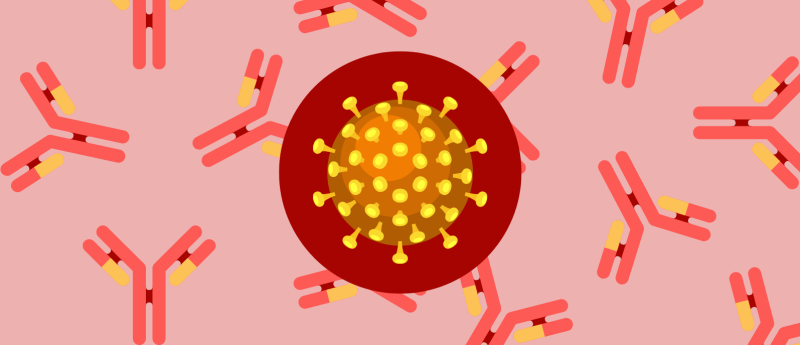
Scientists at La Jolla Institute for Immunology (CA, USA) are the first in the world to characterize human antibodies capable of neutralizing measles virus. These antibodies bind to key sites on measles virus and prevent the virus from entering host cells.
The new panel of human antibodies may form the basis for future medical therapies against measles infection. In the study, an infusion of these antibodies resulted in a 500-fold lower viral load in a rodent model of measles infection.
“These antibodies work as prophylaxis—to protect from initial infection—and they work after viral exposure as a treatment to fight measles infection, ” shared Erica Ollmann Saphire, who led the study. “It may be possible to give someone an infusion of these antibodies and deliver the immune response they wish they had.”
The urgent need for measles therapies
In recent years, decreased vaccination rates have led to deadly measles outbreaks across the United States and around the world. This sharp rise in measles cases is especially dangerous for the millions of people who cannot receive a measles vaccine.
The measles vaccine is incredibly safe and effective, but it does contain a live, weakened virus. This means people who have compromised immune systems, such as those who are pregnant or receiving chemotherapy cannot receive the vaccine. The very young are also at risk. Infants must wait until they are 12 months old to be vaccinated, and most children in the United States aren’t fully vaccinated against measles until age six.
“There are a growing number of people that can’t be vaccinated or haven’t been fully vaccinated,” commented Saphire. “The very same people who can’t be vaccinated or can’t be vaccinated yet, are the same people for whom a measles virus infection would be the most severe—or be lethal.”
Until recently, enough people were vaccinated against measles virus that the risk of exposure for this unvaccinated group was very low. Unfortunately, that community protection, called ‘herd immunity’, is no longer.
Right now, there are no measles-specific therapies to help patients. The new study shows that monoclonal antibody therapies may be the way forward.
 A light at the end of the tunnel for Huntington’s disease treatment
New research reveals how tiny ‘tunnels’ allow mutant huntingtin protein to spread between neurons, changing our understanding of Huntington’s disease progression and offering a promising therapeutic target.
Scientists identify powerful antibodies
Monoclonal antibody therapies work because they contain many copies of a neutralizing antibody. These therapies are widely used for a variety of infectious diseases. Even infants receive monoclonal antibody therapies each year to prevent respiratory syncytial virus.
To design a monoclonal antibody treatment for measles, researchers need a clear picture of how human antibodies fight the virus. Saphire and her colleagues began by harnessing an imaging technique called cryo-electron microscopy to capture the first-ever glimpses of how antibodies bind to the measles virus. They started by examining mouse antibodies, and they published that work in a recent Nature Communications paper.
That initial study showed, in stunning detail, where measles virus is vulnerable to antibody attack. The mouse antibodies latched onto one key part of the measles virus, called the fusion protein, to block the virus from entering a host cell.
Could human antibodies do the same thing?
To find out, the researchers analyzed blood from a clinical research volunteer. This volunteer had been vaccinated against measles many years before, so they already had antibodies ready to fight measles virus.
From this one blood sample, the scientists isolated antibodies that bind to the measles fusion protein, and other antibodies that bind to the second key piece of the virus, an attachment protein called ‘H’.
They then captured 3D images of these antibodies bound together with the measles virus.
“We found that these antibodies are exceptionally potent,” shared Dawid Zyla, who served as study co-first author. “Two orders of magnitude better than comparable molecules reported at conferences.”
Measles virus is a shape-shifting virus. When it meets a human cell, it unfolds to reveal viral machinery that fuses with the host cell membrane. The new study shows that antibodies targeting the fusion protein work by locking the protein in place, leaving the virus unable to shape shift and infect a host cell.
Moving forward with preclinical research
The next step was to test these antibodies in a preclinical animal model.
Study collaborators at The Ohio State University (OH, USA) carried out key experiments using cotton rats as a model. They found that all four lead antibodies reduced the viral load when given either before measles exposure or within 24 to 48 hours after infection. One, an antibody called 3A12, which binds to a site on the F protein, rendered the circulating virus actually undetectable.
While more work needs to be done, the researchers see these antibodies as promising tools in the fight against measles. Their new images of the antibody structures provide the materials needed to make the world’s first before- or after exposure treatment for measles virus.
“Now we know what we’re aiming for, and we have the antibodies we need,” concluded Saphire.
This article has been republished from the following materials. Material may have been edited for length and house style. For further information, please contact the cited source. Our press release publishing policy can be accessed here.