
Plastic waste transformed into Parkinson’s drug in bioengineering first
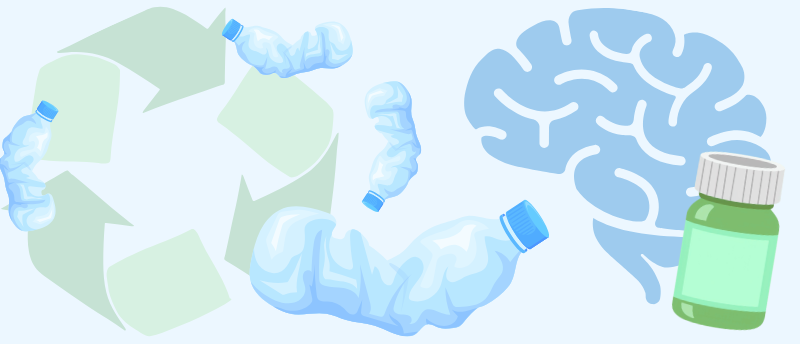
They say one man’s trash is another man’s treasure, or in this case, therapeutic, as a pioneering method turns waste plastic into a drug to treat Parkinson’s disease.
Harnessing the power of bacteria, a novel technology from The University of Edinburgh (UK) can convert poly(ethylene terephthalate) (PET) plastic waste into levodopa (l-DOPA), a frontline medication for Parkinson’s disease. This marks the first time that engineering biology has been used to transform plastic waste into a therapeutic for a neurological disease and could pave the way for much-needed pharmacological and plastic pollution interventions.
Traditionally, the chemical industry, including the production of pharmaceuticals, has relied on finite fossil resources, using energy-intensive processes to generate products that are ultimately disposed of by landfill or incineration, adding to environmental and atmospheric pollution.
Nature offers a more eco-friendly solution, however, having evolved elegant mechanisms for carbon utilization, upcycling and sustainable chemical synthesis. Attempts to exploit these natural processes using engineering biology have largely focused on the bioavailable polymers cellulose, chitin and lignin, but scientists are now starting to explore the use of plastic waste as a microbial feedstock.
 Triple-threat algae engineered to turbocharge microplastic bioremediation
Engineered algae are a bioremediation triple threat, synergizing microplastic removal, upcycling and wastewater nutrient utilization to combat environmental contamination.
Inspired by recent advances in upcycling plastic into high-value molecules like vanillin, adipic acid and paracetamol, the team behind this latest breakthrough sought an innovative way to tackle PET waste, for which existing recycling techniques are often inefficient and still contribute to global plastic pollution. In a new study, they report the successful conversion of industrial PET waste and a post-consumer PET plastic bottle into l-DOPA, a Parkinson’s drug that remains reliant on fossil fuel-derived synthesis.
To achieve this, they engineered Escherichia coli bacteria to convert the PET monomer terephthalic acid (TPA) into l-DOPA via a four-step biosynthetic pathway encoded by seven genes.
First, TPA was transformed into protocatechuate in a reaction catalyzed by Comamonas sp. enzymes. This, in turn, was decarboxylated to become catechol by co-factors from Klebsiella pneumoniae, followed by carbon–carbon bond formation between catechol and pyruvate facilitated by enzymes from Fusobacterium nucleatum in the presence of ammonia. The end product was the coveted l-DOPA.
Then, to further improve sustainability and demonstrate proof-of-concept, they introduced the alga Chlamydomonas reinhardtii to capture CO2 released during catechol generation.
The resulting bioprocess operated under mild, aqueous conditions and achieved high l-DOPA concentrations from both industrial PET waste and a single post-consumer plastic bottle, illustrating the potential of this pathway for generating high-value drugs for the treatment of neurological disease from discarded plastic. With further optimization, it could even bolster manufacturing methods beyond pharmaceuticals, for products including flavorings, fragrances, cosmetics and industrial chemicals.
“This feels like just the beginning,” corresponding author Stephen Wallace lauded. “If we can create medicines for neurological disease from a waste plastic bottle, it’s exciting to imagine what else this technology could achieve. Plastic waste is often seen as an environmental problem, but it also represents a vast, untapped source of carbon. By engineering biology to transform plastic into an essential medicine, we show how waste materials can be reimagined as valuable resources that support human health.”