Spatial technologies: achieving true single-cell spatial analysis
Spatial biology offers researchers a comprehensive view and understanding of complex tissues, capturing details about their organization and structure that inform how they function. This ability to illuminate cell identity and location within a wider system has made spatial biology a key component of studying the tumor microenvironment and mapping healthy tissues, among other applications.
The spatial field is still developing, with novel, advanced technologies evolving to overcome the challenges researchers face with current imaging-based and sequencing-based methods.
This In Focus, sponsored by Takara Bio, will explore available spatial technologies, highlighting their working principles, strengths and limitations. In particular, we will showcase a new spatial technology that, when combined with single-cell multiomic workflows, provides a more comprehensive and deeper analysis of your tissue samples.
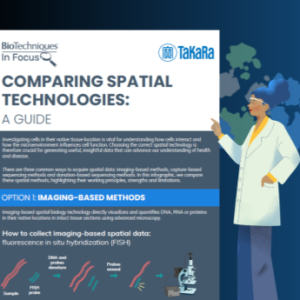
INFOGRAPHIC
INTERVIEW
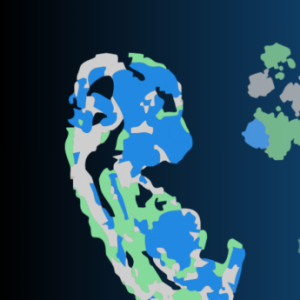
Capturing true single-cell resolution within your spatial data
In this interview with Linda Orzolek – a molecular biologist and the Vice President of Operations and Corporate Strategy at OMAPiX, Inc. – we dive into how a unique spatial technology is overcoming the limitations of other spatial methods, then highlight top tips for collecting and analyzing spatial data.
RESOURCES
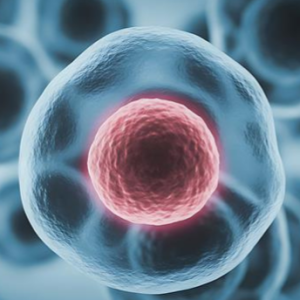
Delivering true single-cell spatial omics using Trekker® technology
In this product note, Takara Bio explore the Trekker Single-Cell Spatial Mapping Kits, which elevate single-cell research by transforming standard single-cell genomics data into spatial data.
This content was supported by Takara Bio.