
Targeting ABC to tackle AMR: taking advantage of bacterial membrane proteins
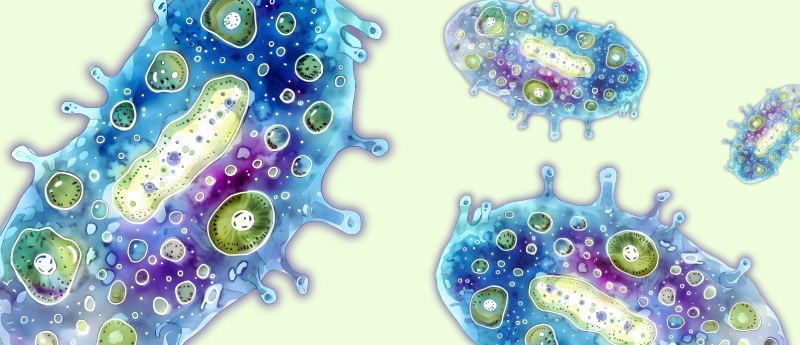

ATP-binding cassette (ABC) transporters are membrane-bound proteins that transfer molecules across the cell membrane. Although found in all organisms, most of these transporters in humans are for exporting molecules, whereas in bacterial pathogens, these transporters are responsible for both importing and exporting. This makes ABC importers good potential targets for anti-bacterial therapeutics development.

Heather Pinkett (left) – Professor in the Department of Molecular Biosciences at Northwestern University (IL, USA) and President of The Protein Society (MD, USA) – uses X-ray crystallography and cryo-electron microscopy (cryo-EM), among other techniques, to study ABC transporters that exist in pathogens.

At ELRIG’s Drug Discovery 2025 (21–22 October; Liverpool, UK), we sat down with Heather, who delivered the Keynote on the first day of the event, to learn more about ABC transporters and what targeting them could mean for combatting antimicrobial resistance (AMR).

Why are ABC transporters good targets for tackling AMR?

When we start thinking about what systems or pathways would make a good drug target, we think about a system that’s going to give us access to different compartments within the cell. It is also essential to understand the mechanism to know whether that system can be utilized for drug uptake. In the case of ABC transporters, we know that nutrient-uptake systems are highly specific, which will be helpful when designing molecules that can bind those same substrate-binding proteins, allowing us to deliver a nutrient or drug into the cell.

Furthermore, ABC importers exist in bacteria but not in mammalian systems. This distinction means that when we target a specific importer – especially its binding protein – I can design a peptide mimic that will only target my bacteria of choice without affecting human cells.

Once I’ve designed a peptide mimic that can bind a specific importer protein, then I need to figure out if my peptide can out-compete the native substrate. It’s at this stage that technologies, like machine learning, are playing a role in helping us discern the rules of binding and recognition, and ultimately, letting us design de novo drugs. We need a novel approach, which understands the mechanism of resistance and how resistance happens to new drugs, to tackle AMR.

I imagine a future where we can design novel drugs in parallel with studies that predict how bacteria might evolve in response to them. This way, we can learn more about resistance to that specific drug and how that drug may be modified before becoming obsolete. We are not at this stage yet; however, with all the data we’re collecting now, we’re hoping to move in that direction.

What technologies do you use to investigate these transporters?

We use several technologies to study membrane proteins and their binding characteristics; I usually tell my students to take advantage of any technique that we have access to.

When we want to get a snapshot of what the protein of interest looks like, we use X-ray crystallography or cryo-EM. Cryo-EM, in particular, provides more dynamic information, so we can get different conformational arrangements or states of the protein as it transports a substrate, such as a nutrient. These structural insights have been beneficial for understanding how proteins recognize nutrients and, by extension, potential drug targets. If you’re able to co-crystallize a binding protein with its substrate, you know exactly what residues are involved in binding.

When you know how a substrate binds, you can design molecular mimics that can mirror that same binding pattern, and hopefully, identify additional interactions that allow your drug to bind even tighter with the protein of interest, allowing the drug to out-compete the nutrient or native substrate.

Beyond the protein snapshots we capture, we also need to understand the biochemistry – affinity and kinetics – of the proteins we’re working with. To gain this information, we use techniques including surface plasmon resonance, microscale thermophoresis, or biolayer interferometry – sometimes all three – and occasionally isothermal titration calorimetry as well.

Another important consideration when working with membrane proteins is ensuring that they are properly folded, so we use dynamic light scattering and circular dichroism to accomplish this.

Right now, we’re doing a series of experiments to understand how the binding protein binds to the transporter, the frequency with which it binds, and whether it’s fully bound or partially bound. To investigate this, we’ve dabbled in electron paramagnetic resonance and single-molecule studies using fluorescence resonance energy transfer.

We’re lucky enough to collaborate with colleagues at Northwestern and beyond who have these specialized instruments and generously train our students on how to use them.

What challenges have you faced in this work, and how have you worked to overcome these challenges?

Just being able to express and purify a membrane protein is a challenge. To address this, we work with many targets and look for homologs that are predicted to share the same mechanism. If we start with 100 protein targets and we end up with 10 that we can express and isolate, then we consider that a success.

The other major challenge is extracting these proteins from the membrane. Membrane proteins prefer to remain in a lipid bilayer, so we need to find suitable mimics that allow the protein to remain folded and active once isolated from the cell. To accomplish this, we use different types of detergents and polymers to try and understand the properties of the protein and preserve the protein’s structure and function.

What’s next for your research?

Outside of implementing machine learning in drug discovery, another direction that we’re really interested in is studying these proteins in their native context rather than in isolation. We can gain deeper insights into how a protein functions when we can study it in the cytoplasm or as part of its natural network of interactions. For example, when we think of inner membrane importers, they are responsible for transporting nutrients from the periplasm into the cytoplasm, which requires coordination with outer membrane proteins. Binding proteins present in the the periplasmic space have to find their target – the transporter to deliver nutrients. Additionally, there are also likely other proteins that are around – such as chaperones – that are involved in this process. So, there’s a whole entire pathway that we want to be able to understand comprehensively, rather than investigating each protein individually.

What innovations are you most excited about in the drug discovery space after attending Drug Discovery 2025?

I attended several five-minute talks given by companies on how they’re using different technologies to answer fundamental biological questions, from developing specific antibodies to integrating multiple lab technologies onto a single platform. The integrated platform system was of interest, as all our technology in the lab is independent; these systems don’t communicate with one another, so the fact that they have developed a platform that allows you to do protein purification all the way up to biochemical analysis was amazing to learn about.

The other aspect of Drug Discovery 2025 that I’ve particularly enjoyed has been the conversations and the collaboration opportunities that have come out of those conversations. I’m meeting people who have such varied expertise who want to collaborate on the ABC transporter work I shared in my presentation, which has been exciting.


The interviewee has no competing interests to report.

The opinions expressed in this interview are those of the interviewee and do not necessarily reflect the views of BioTechniques or Taylor & Francis Group.


  You might also be interested in...