
UV red flag: color-changing ‘living’ material warns of harmful radiation
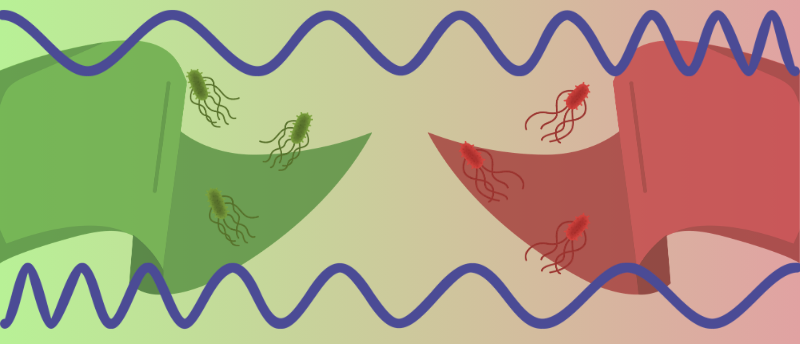
What if you could *see* UV radiation before it has the potential to cause harm? A novel color-changing ‘living’ sensor could make this a reality, revealing exposure to damaging UV light and paving the way for future innovations in materials science.
Researchers at the Technical University of Munich (Germany) have developed biohybrid UV sensors containing proteins and bacteria that change color upon contact with UV-A radiation. The feat has the potential not only to curtail the dangers of UV radiation, but also to pioneer a new wave of living materials that can tackle urgent environmental challenges based on the biological functions of cells.
As a mutagen and a non-specific DNA-damaging agent, UV radiation is a well-established environmental hazard that poses risks to human well-being as well as to material longevity and performance. Despite this, technologies to monitor this harmful radiation are limited and not widely used in everyday settings.
Engineered living materials, such as the one created in the present study, are one path scientists are exploring to address this gap. By integrating living cells and non-living materials, researchers can confer responsiveness, self-organization and adaptability to produce solid materials that can repair themselves, grow or respond to environmental stimuli. Biohybrid coatings show particular promise, offering a more sustainable alternative to traditional approaches, which rely heavily on fossil-derived components.
‘Li ving’ bacterial biosensor gives wine spoilage detection a glow-up
How can you tell if your wine has spoiled? This new ‘living biosensor’ will give you a glowing heads up.
In pursuit of such a material that directly addresses the hazards of UV radiation, the team has designed a novel biohybrid UV-sensing coating that incorporates dry Escherichia coli biomass functionalized with a light-responsive photoconvertible protein called mEosFP.
When exposed to UV-A light, mEosFP undergoes a stable, irreversible color change from the whimsically named green shade ‘Vegan Villain’ to a red known as ‘End of Summer’. This shift is driven by the cleavage of the His62-Tyr63-Gly64 chromophore in the protein’s polypeptide backbone.
To exploit this colorful transition, researchers engineered E. coli to produce mEosFP. Initially, they purified the protein and integrated it into conventional CaCO3-based coatings, without bacterial cells present. However, the observed color change was unsatisfactory and the coating experienced surface defects, so this line of enquiry was quickly abandoned.
Instead, they used mEosFP proteins encapsulated within bacterial cells, assimilating the entire biomass into the formulation.
“The bacteria seem to act as a kind of protective space for the proteins, shielding them from the chemical and physical influences within the coating,” explained the study’s lead author Amelie Skopp.
The result was a sensor that can indicate UV light exposure by changing color from green to red, within just 15 minutes of irradiation with UV-A light at 400 nm. The Biohybrid coatings also demonstrated the ability to undergo photoconversion after storage for up to a year, providing a stable and lasting color change. It marks the first time, to the study author’s knowledge, that a UV sensor with extended storage capability, large bio-based component and irreversible color change has been developed.
The system represents a more sustainable, scalable and conclusive UV-monitoring solution, with myriad potential applications, ranging from outdoor clothing that provides a UV exposure warning to storage and shipping of light‑sensitive pharmaceuticals and monitoring UV-based surface disinfection processes.
“The fact that we have now managed to stably integrate biological components into coatings is an important starting point for developments we urgently need in light of today’s global challenges,” team lead Volker Sieber concluded.