
Introducing PLAMseq: new sequencing method transforms proteogenomic characterization
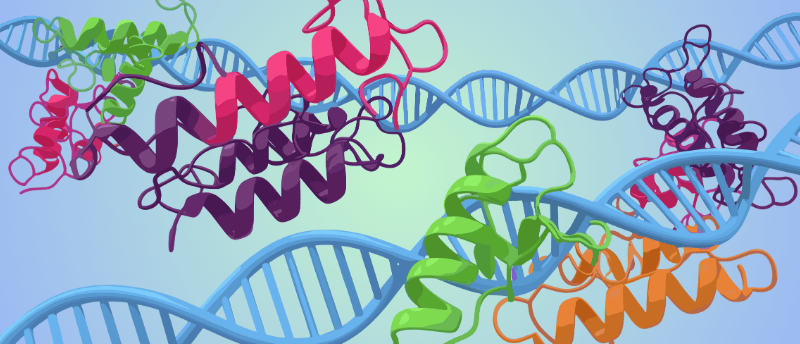
A new technology to enable the simultaneous performance of proteomics and genomics has been developed.
An innovative new technique from the Andalusian Centre for Molecular Biology and Regenerative Medicine (Seville, Spain) enables the characterization of the genomic and proteomic environment of a protein of interest in the same experimental protocol. As a result, proximity-labeled affinity-purified mass spectrometry plus sequencing, aka PLAMseq, fills a long-established methodological gap in the study of chromatin-associated proteins.
Studying the distribution of proteins across the genome is essential for our understanding of epigenetics and chromatin dynamics and, therefore, our grasp of human disease, yet it presents some major challenges. Existing techniques for studying genomic protein distribution – like chromatin immunoprecipitation and sequencing (ChIP-seq), Cut and Run and Cut and Tag – require specific high-sensitivity antibodies, which limit their potential.
“One of the major bottlenecks for studying the genomic loci of chromatin-associated proteins via ChIP-seq and others was the availability of specific ChIP-grade antibodies,” explained Román González-Prieto, principal investigator of the study, while speaking to BioTechniques. “Plus, antibodies are costly reagents that often face specificity and sensitivity issues.”
Meanwhile, the existing antibody-free approach, DamID, has poor resolution compared to other methods, leaving researchers crying out for a viable alternative – enter PLAMseq.
PLAMseq utilizes a rapid biotinylation enzyme called TurboID, which tags nearby proteins, enabling the genomic loci and interacting proteome of a protein of interest to be identified in the same workflow. Furthermore, it can be used to map protein interactions and ubiquitin-like protein modifications.
 Switching gears: novel platform spills secrets of transcription’s speed regulation
Thanks to a first-of-its-kind platform, we are starting to understand how the molecular engine responsible for transcription in mammals controls its speed.
The researchers demonstrated that biotin can be used to induce TurboID activity, DNA–protein crosslinking can take place and then they can co-purify the proteins with their associated DNA using streptavidin beads. Next, protein–DNA crosslinks are reverted and the DNA is sequenced, while the proteins are trypsin-digested and identified by mass spectrometry.
Summarizing the concept, González-Prieto told BioTechniques: “PLAMseq is basically performing proximity labelling with biotin and then inducing crosslinking of the proteins to DNA. This way, we can co-purify altogether the genomic and proteomic environment of a protein of interest and identify it by mass spectrometry-based proteomics and DNA sequencing, all in the same experiment.”
The team validated PLAMseq using two well-characterized genome proteins, RNA polymerase II and CTCF, illustrating its robustness and reproducibility. They also applied it to SUMO-modified H1 histones, which have historically been difficult to study due to a lack of specific reagents.
Here, they revealed that the enzyme SETDB1 binds to SUMOylated histones that colocalize with H3K9me3 epigenetic modifications at repetitive regions of the genome, which could help our understanding of DNA compaction and gene expression regulation.
“PLAMseq can be used in some cases as a more affordable alternative to ChIPseq, and also in cases where a ChIP-grade antibody is not available,” González-Prieto noted of its applications. “Nevertheless, I think the bigger added value of PLAMseq is to map protein interactions that occur in the genome using its split-PLAMseq mode.”
Its split-PLAMseq mode allows for bimolecular complementation, whereby two proteins are tagged, each with a complementary fragment of TurboID. When these proteins interact or are in close proximity, TurboID’s enzymatic activity is restored, and proteins nearby to this interaction are biotinylated.
For González-Prieto, the key takeaway from the research is “the straightforwardness of the method and its applicability to study protein interactions in the genome and proteins that have been modified by ubiquitin-like modifications, which is, in most cases, not possible with antibodies.”
As for the future of the technology, he concluded: “I think what is next [for PLAMseq] is to exploit it to answer research questions that had no suitable method before.”