
Pet flea treatments may spell bad news for creepy-crawly communities
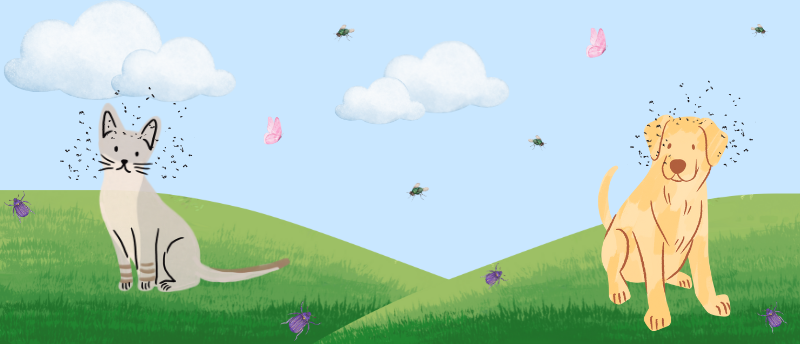
Common pet flea and tick drugs may be contaminating the environment, posing a particular risk to scavenging insects.
Researchers from VetAgro Sup, Campus Vétérinaire (Lyon, France) have investigated a class of antiparasitic medications, commonly used for flea and tick prevention in cats and dogs, revealing that the drugs persist in pet feces and may therefore be hazardous to dung-feeding insects.
Isoxazoline antiparasitic drugs are a relatively new class of ectoparasiticides used in veterinary medicine to treat companion animals. Isoxazoline’s four active substances – fluralaner, afoxolaner, lotilaner and sarolaner – are marketed worldwide for the control of fleas and ticks. These are primarily eliminated via the biliary/fecal route, which presents a risk of environmental contamination.
The European Medicines Agency (EMA; Amsterdam, Netherlands) addressed this potential in a scientific opinion on the environmental risk assessment of ectoparasiticides used in domestic animals. It concluded that there is currently insufficient data about the release of these substances into the environment and the impact this may have on non-target species, although recent studies suggest that fluralaner and other antiparasitics can be transferred to the environment via feces, urine and pet hair.
Seeking to fill this knowledge gap, researchers examined fecal elimination of isoxazoline drugs in dogs and cats owned by veterinary students. A total of 40 animals were treated over the course of the study, which tasked owners with collecting their pets’ feces.
 Earthworms vs antibiotic resistance: an unexpected ally?
Earthworms could become unexpected allies in the global fight against antibiotic resistance by helping farmers turn manure into safer, high-value organic fertilizer through a process called vermicomposting.
Using liquid chromatography tandem mass spectrometry, the researchers identified the four isoxazolines in these samples. Two of these – fluralaner and lotilaner – were still present in pet feces after the end of the recommended treatment period.
Meanwhile, their pharmacokinetic analysis revealed the median half-lives of each drug in cats and dogs: 15.5 and 22 days each for fluralaner and lotilaner in cats; and 22.9, 24.6, 19.7 and 17.4 days for fluralaner, lotilaner, afoxolaner and sarolaner, respectively, in dogs.
Then, a risk assessment was conducted based on a Monte Carlo simulation to estimate the likelihood of exposure of non-target insects to a potentially toxic dose. Based on the available insect toxicity data and on the elimination kinetics, the findings suggest that dung-feeding insects could be highly exposed to isoxazoline drugs, and that fluralaner and lotilaner pose the greatest threat.
“Our preliminary assessment suggests that pet ectoparasiticides may be detrimental to the environment and supports the conclusions from the EMA scientific opinion,” the researchers write in their conclusion.
This may spell bad news for bugs, but also for the wider ecosystem. Insects are essential for processes like nutrient cycling, soil health and pest control, so falling victim to environmental contaminants may disrupt the already delicate equilibrium that exists.
In addition, fecal elimination of isoxazoline parasiticides could result in soil and water contamination, which deserves attention too, they add.
Although it’s still too early to draw firm conclusions, the team writes that their findings “emphasize the need for further research on environmental contamination […] and impact of veterinary parasiticides on non-target species.”