
Creating early career opportunities for advanced therapy manufacturing and development

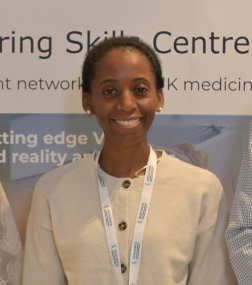 Bernice Wright (left) is a teaching lecturer and research scientist at the University College London (UCL; UK) Department of Biochemical Engineering. She teaches the Manufacture and commercialisation of stem cell and gene therapies MSc and leads STEM outreach on the RESILIENCE Skills training hub. Her research is focused on the development of extracellular vesicle therapeutics for regenerative medicine and manufacturing platforms.
Here, Bernice gives us an insight into the RESILIENCE program, which spreads awareness of the job opportunities in advanced medicines manufacturing and helps people looking to work in this sector gain practical experience, opening up a series of opportunities to help involves a mix of outreach, accelerator programs, work placements and international collaborations.
Please introduce us to the RESILIENCE program
The RESILIENCE Skills program is a UK-wide initiative funded by the Office for Life Sciences (OLS; London, UK) and overseen by Innovate UK (Swindon, UK), partnered with UCL, University of Birmingham (UK), Teesside University (Middlesbrough, UK), and Heriot-Watt University (Edinburgh, UK). RESILIENCE is designed to address the skills gap in medicines manufacturing in the UK. Their mission is to build a scalable, end-to-end talent development network for the UK medicines manufacturing sector, using a coordinated, networked approach that embeds equality, diversity and inclusion to build resilience and ensure sustainable workforce growth.
RESILIENCE has adopted the latest digital training technologies, including virtual reality and mixed reality approaches, to develop a workforce capable of adapting to rapidly evolving technologies impacted by digitization and automation. They have also incorporated STEM outreach, degree apprenticeships, further education and education content committees into their programme to provide a holistic approach that aims to funnel individuals at formative education levels into pharmaceutical industry careers. Schools and colleges are provided with teaching tools, including a 2-year loan of VR headsets and software licenses, and materials, like lectures, workshops, workbooks, webinars and events through free standard and paid for enhanced affiliate membership models.
RESILIENCE includes several key strategic partnerships with Life Arc, the British Society for Gene and Cell Therapy (both London, UK), and the Industry Skills Accelerator (ISA), funded by the OLS. The ISA connects RESILIENCE to the Cell and Gene Therapy Catapult (London, UK) that supports their training provision for degree apprenticeships, the Centre for Process Innovation (Middlesbrough, UK) to support training on the manufacture of nucleic acids, and COGENT Skills (Warrington, UK) to support engagement with industry. The training and technology-led education that RESILIENCE has led over the past two years have been recognized with the award of Institution of Chemical Engineers Global Awards winner 2025 and Learning Technologies Gold Award 2025 for Best Technologies Project, Public and Non-profit sector.
You mentioned outreach for young students to introduce them to the possibility of a career in advanced medicine manufacturing. What does this involve?
RESILIENCE delivers STEM outreach to students at all educational levels through events and activity programmes run at partner organisations or at national STEM festivals and careers fairs across the UK. Students, mostly late-stage school students, are offered free summer and autumn laboratory placements that provides them with an opportunity to work on a short-term research project to gain basic lab skills. The STEM activities included as part of the RESILIENCE outreach programme also includes GCSE work placements, STEM career events, women in biopharma leadership events, lab tours, Christmas lectures, and conference days.
RESILIENCE also has paid-for practical courses. Can you tell us more about these?
These are practical industry-relevant courses designed and delivered by RESILIENCE partners as hands-on laboratory and case-study-based experiences, typically 3 days in length. The technical and professional training provided on those short courses is focused on bioprocess engineering, analysis of medicinal products, and data handling. The costs for courses range from £950 – £2500 and they are available to anyone who would like training in the core skills needed for the development of conventional and advanced therapeutic medicinal products.
Can you tell us more about the RESILIENCE accelerator courses?
Absolutely! There are two forms of our accelerator courses. The first is our leadership accelerator course: a curated two-part programme designed to identify and nurture the next generation of medicines manufacturing industry leaders. This free course is for late PhD, post-doctoral researchers and early career researchers in academia and industry. The first part, ‘My Future Plan 1’ is delivered remotely to groups of up to five participants and involves:
- An online psychometric test.
- Behaviour profile report generated and analysed for specific natural/inherent behavioral traits
- Facilitated 1.5 hr co-learning workshop with personalised individual time built in to build a distinctive picture of yourself and your natural behaviour traits.
The second part of the course, ‘My Future Plan 2’, is delivered following a 3 to 4-week reflection period after part 1. This is delivered face to face and delegates work together in groups of up to 10 who have all completed ‘My Future Plan 1’. They work towards understanding the key career skills needed to achieve their plan.
The second is the RESILIENCE workplace Accelerator programme, designed to meet the needs of post-16-year-old school students, undergraduates, apprentices, PhDs and Post Doctoral Researchers. It has been aligned to the T-level curriculum for enhanced affiliate members as a foundation version of the main accelerator course. The course is delivered over five days and provides an overview of the UK medicines manufacturing ecosystem and the careers that students can access in this sector. The content of the course includes:
- Module 1: Introduction to the UK Medicines Manufacturing Sector
- Module 2: Focus on the Patient, Quality and Good Manufacturing Practices
- Module 3: Health & Safety and Sustainable Manufacturing Technology
- Module 4: Organisations’ Values and Expected Behaviours
- Module 5: Career Progression, Interview Skills and CV Writing
You mentioned some of the RESILIENCE program’s connections with industry and academic institutions. How are these connections leveraged beyond these paid programs and outreach?
RESILIENCE provides formal work placements that are designed to slot into vocational T-level and BTEC courses (late-stage school qualifications in the UK) to fulfil their requirement for 45 day and 36 hour per year work placements respectively. Those placements are free and involve the students working in various roles related to careers in the biopharmaceutical industry, including that of a research biochemical engineer.
The RESILIENCE partner UCL is a good example as a provider of these placements, collaborating with the Canary Wharf Group to organize BTEC work placements together with life science companies (hVivo, AviadoBio). This strategic collaboration is a key aspect of future plans to connect underserved schools in East London to life science companies. The VaxHub, an international research hub for vaccine manufacture based at UCL Biochemical Engineering, is also an important collaborator for the work placements delivered by UCL RESILIENCE.
Is RESILIENCE just a UK program, or does it have a more global reach?
RESILIENCE has initiated a collaboration in Canada with the Biomanufacturing Hub Network (BioHubNet; Toronto, Canada), an Innovation, Science and Economic Development/ Community-Based Residential Facilities (ISED/CBRF; Ottawa, Canada) funded biomanufacturing training program at the Canadian Hub for Health Intelligence and Innovation in Infectious Diseases (Toronto, Canada). BioHubNet provides microcredential training, experiential learning through internship, and targeted business development support for early-stage start-ups that are developing biomanufacturing plans. The RESILIENCE and BioHubNet training hubs and education providers started working together from August 2025 and the collaboration will run until Jul. 2027, to train national and international workforces in skills relevant to everything from technology and infrastructure changes to medicines manufacturing, including digitization and automation.
This important partnership will address the lack of highly skilled workers in the rapidly evolving pharmaceutical industry and help to prepare for future health care emergencies. It will also provide a workforce to resolve the manufacturing challenges that will abound from the new generation of advanced cell and gene therapies that are set to become the modern standard of healthcare. The hubs will also support small and medium enterprises (SMEs) in the life sciences, biotech, and biomanufacturing sectors with the right talent and workforce.