The BRAIN miniseries | Exploring the neuropathogenesis of HIV and mentoring the next generation of scientists
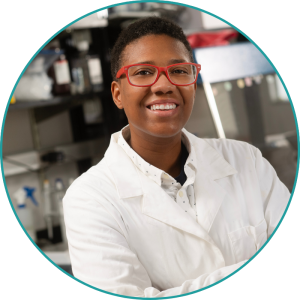
In our third episode of the BRAIN (Black Researchers Addressing Inequalities in Neuroscience) podcast miniseries, we’re exploring the research being done at the intersection of neuroscience, immunology and pharmacology to investigate HIV.
Our guest is Dionna Williams (left), an Associate Professor at Emory University (GA, USA) whose research centers on the neuropharmacology and neuroimmunology of HIV, identifying mechanisms by which HIV antiretroviral therapies cross the blood-brain barrier, the capacity of the brain as a drug-metabolizing organ, and the impact of substance use on treating the brain during HIV. Dionna’s group is also evaluating whether cannabinoids can be used to modulate immune responses to HIV and restore neurologic health. Furthermore, Dionna incorporates studies evaluating biologic contributors that perpetuate HIV health disparities into their research program. Beyond research, Dionna is passionate about supporting trainees from marginalized groups in their scientific journeys.
[01:22] What made you want to research the neuropathogenesis of HIV?
That’s a great question. It wasn’t planned and a little bit serendipitous. I was introduced to HIV research in college. I participated in a summer program after my sophomore year, and I was assigned there to work on HIV, and I was looking at transmission risk factors, and the project was exciting because I just didn’t know anything about HIV beyond what you just know colloquially. It spurred my interest in immunology, and why different people get sick differently, and why some people with HIV fare better than others. But that was for the summer, and when I came back to university in the fall, I started attending seminars, and I became really interested in neuroscience, and I took a clinical neuropsychology course that was just fascinating, learning about how your brain is all of who you are, and how a brain injury can dramatically change a personality; that was really just, as a 20-year-old, mind-blowing. And so I entered my PhD uncertain how I could kind of marry both of these interests, and it was very fortuitous that I found an excellent mentor who happened to work on the neurologic complications of HIV, which was an area that I didn’t even know existed. This turned out really well; I had someone who was a fantastic mentor and supported me, who was able to introduce me to this world that combined both of my interests, and I loved it. I’ve been working in the field ever since.
[03:06] Your research covers a great deal of ground, working at the intersection of neuroscience, immunology and pharmacology. Please outline your lab’s projects.
One of the areas of my lab is, because we have neurologic infection during HIV, I’ve become really interested in trying to treat the brain more effectively. So, the brain is this really unique part of your body. It has a really unique environment with very specialized cells that live there. It has this kind of fortress called the blood-brain barrier (BBB) that serves to protect the microenvironment. Lots of things in the blood are great for the rest of your body, but they’re actually toxic and damaging to the brain. The BBB allows things to get in when they’re supposed to get in, keeps things out when they’re supposed to be kept out, clears waste and things like that. So it’s essential for normal health. But it makes it hard to treat the brain because therapies are not inherently something that we have in our bodies, and they certainly can’t just pass this barrier. So, one of the challenges with HIV is we have fantastic therapies, but they just don’t get to the brain as easily as everywhere else. We’re trying to understand how they could get into the brain, asking what kind of proteins they may interact with to get in there, such as drug transporters that help things get in and out of the brain. These proteins have normal functions, but therapies can also use these channels to get into the brain. I’m looking at that in the cells of the BBB, and then I’m also looking to understand why the therapies go to different parts of the brain. Is this random, or is this for a reason? Does the BBB differ in different parts of the brain? Maybe if we understand this, we can exploit that to get therapies where they need to go. So, that’s one of the parts of my lab, trying to treat the brain more effectively to help get rid of the infection there. That’s really hard to treat.
Another part of my lab is interested in inflammation and HIV. So again, we have these fantastic therapies. They’re designed to suppress the virus from replicating, and they do a great job at that. But they don’t do other things. Because we have this lifelong infection that you can never get rid of with HIV, your body is always responding to it. There’s this chronic inflammatory response. Also, your immune system becomes a little bit damaged early on during infection, and some of the cells that normally can respond appropriately, they may have dysfunctional immune responses. So, even when you suppress the virus, these things aren’t fully restored to normal. Because we have this kind of hyper-inflammatory environment that persists, people with HIV have a risk for a lot of comorbid disorders, including neurologic disorders, but also metabolic dysfunction, liver dysfunction, kidney dysfunction, cardiac dysfunction. And it’s all because of this inflammation. So, we’re trying to see how we can suppress this in a way that works for most people. And we’re hoping that it can be used in tandem with the therapies. They’re not designed to inhibit the virus necessarily, right? It’s supposed to suppress the immune response back to a normal functioning level. We’ve looked at a couple different things in the lab, and we’ve been really interested and surprised to find that some of the compounds in the cannabis plant are actually really beneficial. We’re doing some studies looking at cannabidiol, or CBD, and finding that it’s really anti-inflammatory, and it also seems to have a little bit of an antiviral effect as well. This has been done in cell culture with human cells that we get from a healthy person, we infect them in the lab, and then we give them the cannabidiol. And we’ve done some studies in animals as well and have seen some benefit there. And while it’s promising, it’s far from clinical use. I could never tell someone to go to your dispensary and get some CBD to cure HIV. That’s not what we’re saying. But it does seem at least maybe some of the receptors that cannabidiol interacts with could be potentially leveraged therapeutically, but we need clinical trials to better inform. Now, we’re going to be doing some studies looking at THC as well to see if it is comparable, so we can really get at the mechanisms by which these plant compounds have surprising anti-inflammatory and potentially antiviral effects. We’re excited about that, but a lot more work has to happen.
Another thing that we’re really interested in is the people behind HIV. It’s a really diverse population of people, and that diversity isn’t always represented in the science that people are doing. Here in the United States, the HIV epidemic is really different depending on the part of the country you’re in: a rural area versus a suburban area versus an urban area. We don’t see everyone involved equally in clinical trials; we don’t see everyone captured in clinical studies or research. We’re trying to understand, in addition to some of the more public health factors that people are looking at to try to have equal treatment and equal prevention, are there any biologic effects that are happening in unique populations that may impact their HIV disease: people that come from a background of trauma or people that have other comorbid disorders, people that may have differing abilities for therapies to work effectively given their ancestry because they may have unique forms of these drug-transported proteins, for instance, that everyone has, but different groups have different genetic sequencing that may change how they interact with the medicines. People that use addictive substances, some of those may impact the ability of the therapies to work effectively, and many of them directly increase the virus and affect inflammation. So, we’re trying to give a more holistic approach from our standpoint as scientists in the laboratory; we don’t work with patient populations in the clinic and treat them, but we can understand the different life factors of people living with the virus and see if we can model that to make better therapies that work for most people.
 Advancing HIV research and equity: Dionna’s unique path in science
Are you interested to learn more about Dionna’s scientific journey? In this feature from our sister site, Bioanalysis Zone, you can read more about their story, highlighting the power of curiosity, resilience and collaboration in driving meaningful change.
[9:30] Can you tell us about the lab techniques and models that you use in these studies? What are the major technical challenges you’ve faced in this research?
I can start first with our BBB work, looking at therapeutic access to the brain. My laboratory has an in vitro model of the human BBB. This model is really fantastic because we can use it to look at things entering the brain, be it pharmaceuticals, small molecules, antibodies and even immune cells or cancer cells. So, it’s really widely applicable. We use all human cells that are primary derived, and we think this is important because when we use immortalized cells, it can change some of the features that the cells have, and they lose some of their properties that we see in real life. This is a Transwell system. It has two sides, and we seed all three cells of the BBB together. On the upper side, we add our gray microvascular endothelial cells. These cells line the lumen of the blood vessels that make up the BBB. Then on the underside, which is modeling the brain side, we add pericytes and astrocytes. These are really essential for communication with endothelial cells. This Transwell system has a polysilicate membrane, and because of this, there are little pores in that that allow for the end feet of the astrocytes and the pericytes to physically contact the endothelial cells, and because they’re touching, it helps make a really tight barrier that’s impermeable to things that we see in real life, like albumin.
So, it’s a really fantastic model that we use in the lab. We’ve shown that entry of HIV drugs across this model reflects what we see in our animal models and in people. It’s a nice reductionist way to study this; we don’t have to use animals for everything. It has the benefit of having a human background, so human genetics. It’s also neat because we can look at different mutations, like I was mentioning, some of the different alleles that people have in our drug transporters or our drug-metabolizing enzymes. We can look at those in this model to see how they impact the ability of the drugs to cross the barrier.
The other things that we do is we get a lot of cells from people, mainly immune cells. We get a lot of blood from healthy donors, and we isolate people’s immune cells from the blood. Then, we can culture them with various factors that keep them alive and healthy, and this is a really big part of our group because we want to study human disease. What we find is people are remarkably variable. We see different people have different levels of inflammation at baseline, or some people make a really strong inflammatory response to HIV while others make a weaker response. Some people’s cells are highly infectable, and others’ are less so.
For some people, for instance, cannabidiol is fantastic and brings inflammation back down to zero. For other people, it’s less effective. So, while this makes things a little bit tricky because our findings are really variable, we think it’s important to capture the diversity that is inherently part of people. We all know some people get a cold, and they’re fine in a day, and some people get a cold, and they’re suffering for a week and a half. This helps us be able to get at some of those intrinsic differences in people, and to figure out how we can make, again, the best therapies for each specific person. What makes you respond better to something and poorly to something else? We think these models are really awesome. They’re timely, and they’re very expensive, but we think it’s important. It requires that we use cells from a large number of donors so we can really see what the general trends are. It keeps things exciting and fun, and we enjoy being able to do studies that we think are directly benefiting people.
Sometimes people’s cells just don’t work the way you want, but we don’t know why. That can be frustrating because we put a lot of work into getting these cells and purifying them and making all those systems up, and maybe they die. That’s very disheartening, and you just try again later. Sometimes you may say, okay, I’m going to do an experiment with cells from ten people, and then I’m going to have my answer. But it’s the luck of the draw, and so it may be your terrible chance that those ten people do not do what you want. Their cells are not going to be a strong response, and so now you have to do another ten experiments. And so you never know what you’re going to get. And like I said, it can be frustrating, but we think there’s beauty in that frustration and not understanding it. And so now we’re like, well, why did those ten people not do what we expected, and are they so different than the other people that we did? Or we have the really big privilege of being able to call people back, and so sometimes we consider the same person over a period of time. And that’s quite remarkable because it teaches you, yes, there are individual genetic differences, of course, but lifestyle factors also have a huge impact on your cells. So, were you very stressed? Did you have a big deadline at work? Did you have breakfast or not? Have you had a lot of coffee and not any water? Have you been going to the gym? Did you sleep well or did you not? It’s remarkable the variability even in one person over a period of time.
We don’t know everything about our participants, so we’re left guessing a lot of times, but it goes to show that the things you do also directly impact your cells, even when it’s the same genetic background. And so honestly, for all of us, it makes us want to be healthy for ourselves. So, it’s also very interesting to see how the same person’s responses can change.
We have lots of things we can’t control, like, for instance, if someone did get a cold or they were coming down with something, we can’t know what’s going to happen, but they may call us back and say, actually, I’m a little bit sick. And we’ll say, yeah, I realized your cells looked a little unexpected. So, you have to time your experiments, depending on the time of year. Summer is the best time because there are less respiratory viruses going around. There’s generally less sickness. People are out and happier and it’s sunnier, and it seems to make your cells the happiest too.
So, what people learn is when people rest, eat well, they’re generally happy, they’re not stressed, it gives us the best results. I think that alone is really intriguing and gives us insight into our own bodies and what we need to keep our immune system healthy.
[17:02] How important are interdisciplinary and creative approaches to this kind of research? And in what ways do you collaborate with other teams?
It is probably next to mentoring my students and postdocs in the lab; that’s the best part of the job. I think next to that are the collaborations. I really love people. I like working with aligned people. This field is really interdisciplinary by nature: we have virology because of HIV, neuroscience because we’re looking at the brain, immunology because of immune responses, pharmacology because we’re thinking about what the HIV therapies are doing to us and how we can better help them work for everybody. There’s public health as well, thinking about the people behind the disease. And sometimes even those social demographic or lived factors, lifestyle factors that impact the disease outcomes. We do some work looking at cognition, and that requires working with psychologists and psychiatrists. And it keeps it really fun.
We’re training to learn how to speak the language of all these different disciplines. I make sure that my team knows how to talk to an average person as well as a specialist in the field. It makes writing grants a little tricky sometimes because we’re trying to explain complicated concepts to a broad scientific audience, but I really think it makes our science better once we learn how to do that well. Scientific communication has been a really big lesson in this interdisciplinary nature and being creative with how we talk about our science. I realize the most impactful things I’ve done have come from not trying to sound too smart, just telling people about our work, keeping it simple. Of course, I can’t help that we have nomenclature. We have all kinds of systems for naming proteins and genes, and they’re very complicated. But I try to minimize the jargon as much as I can and speak about things in simplistic language so people understand the heart of what we’re trying to do. Then, once they get that mission, we’ll add in the more scientific terms for cell types, proteins, and things like that.
Collaborating with other teams is so much fun. It allows me to do things I would have never been able to do in a million years. While my background is broad, it is still specialized, and there are so many things that I don’t know. It’s really fun to think about combining that with someone else’s experience. Again, they’re experts in what they do. They didn’t know what I do. And when we combine it, we can tackle really unique questions. For instance, we’re just about to begin a grant looking at maternal-fetal outcomes in people that have HIV and the things that impact pregnancy and how the HIV therapies cross from the parent to the baby during gestation and the factors that may impact that, like substance use. It’s so exciting to work on this, and I could never do it without working with a clinical team. I couldn’t do it without working with an OB-GYN, working with someone with expertise in placental health, the cells of the placental barrier, and looking at women’s health, and all kinds of things I just would never be able to do. I can take my expertise and looking at some of those drug transporters at the BBB that also exist in the placenta, and I can bring my insight into substance use, such as cannabis and cocaine use, and my immunology expertise, and combine these with people who do medicine really well. They treat pregnant people really well. They’re pediatricians that know baby outcomes. Together, we can tackle a really important question. And so that’s just one example, but it’s really fun to be able to do things I never would be able to do.
Honestly, I think all scientists, we were all kids at one point, and we were all nerdy kids. This interdisciplinary and creative work helps bring out that scientific joy of when you were a child, doing the most fantastical things and experiments I could never do on my own. It’s fun to work with other people, and I think it makes the science better by having all the disciplines aligned. In reality, we have just one body, all the organs talk to each other, so it doesn’t make sense to only have the cancer people working by themselves, and the immunologists working by themselves, and neuroscience working by themselves. We probably need to all be speaking to each other to figure out how our bodies communicate with each other to tackle these really complex problems underlying human health and disease.
[21:50] Around this time last year, you published a paper highlighting systems neuroimmunology research priorities and future directions, discussed at a meeting at Cold Spring Harbor. A year on, how do you think the systems neuroimmunology research landscape has changed?
This has been a very interesting year for science in the US There have been major shifts in research interest and funding priorities. At the same time, I think neuroimmunology has become even more interdisciplinary, and I think a lot of the things that we identified as some of the bottlenecks, like heterogeneous responses and sex differences, have gotten better. I think people are really interested in tackling these complex problems.
There’s been some things we called out, like looking at animal models and how they don’t always necessarily reflect human disease, and finding a way to take the strength of what we’ve learned in them, and seeing how we can use them maximally. And then how do we bring in more human relevant things, like maybe organoids, and try to find ways to have better biomarkers for disease.
I think a lot of the things that we identified as bottlenecks or priorities, exist, and I’m pleased to say I think there’s been a lot of interest in tackling them, but it has been a little bit tricky this year for US scientists trying to stay aligned with your research interests and the things you really care about, and making sure that you have the funds to do the work you want to do.
There’s been a shift away from animal models to looking at more human-relevant disease, and I think that’s important. Finding ways to make sure that what you’re studying in vivo applies to people is essential and is the best way to make sure we’re not wasting time and money. There’s been a lot of shift for implementation, trying to take our findings and make them actually relevant to people. I think we’re getting closer and closer to understanding the need for cross-disciplinary collaborations. We’re really thinking of how we can best model these really complex systems of nervous cells, immune cells, looking at them throughout the body, but it’s challenging to figure out sometimes how you can fund that work, because funding priorities change, and so people have had to think about creative ways to answer the questions they’re really passionate about.
But I’m at my core an optimist, and I see that there’s still a place for everyone in science. There’s still a place for all the questions you want to answer. And so while things were a little bit scary this past year, I think it leads itself to excitement now that there are ways to keep doing the work you want to do, and kind of be bold and courageous and still do the things you’re interested in.
[24:49] I also wanted to ask about another of your publications, your 2023 Juneteenth publication that highlighted the contributions of and barriers to Black scientists. How did you find that process, and what were the key institution-level solutions suggested to build an equitable framework within science?
This was really a privilege to be a part of. I was invited to work collaboratively with other outstanding Black scientists. They had already begun the work, and I was brought in in the middle. So, for me, it was just a pleasure to even be asked to be a part of this. It was really fantastic to be able to think about all the barriers that we’ve had, all of our successes, and to envision how we can create the landscape for everyone that wants to do science to be able to do it. I think at its core, that’s what science needs, is if you have a passion for this, do it.
And so we thought about some of the higher-level things that we think can help make that happen. We thought a lot about the environment that people are in. There’s now been a lot of resources and activities that help people come into science, like outreach in primary and secondary schooling to university, where people may have summer programs, so there’s a lot of outreach. But we have found that when people get to, let’s say, PhD programs or thereafter, the environments aren’t quite welcoming. There’s not always overt racism, but there are lots of subtle signs sometimes, and sometimes less than subtle as well, more overt, that just make you feel like you don’t belong: people doubting your aptitude, people thinking you only got here because of your race and your background, as opposed to your intelligence, your creativity, your discipline, your hard work, your scientific mind. Some of the steps we outlined are ways to help make the environment more welcoming, so that when we work so hard to get people into science, they want to stay. They’re not going to be stressed or anxious or worried or feel this pressure that they’re representing the entire race. They can just be themselves and do their science. Science is really hard, and lots of things fail, and that should be the only barrier that anybody has. It should not be thinking that, oh my gosh, people don’t think I can do this. People don’t think I deserve to be here.
Everyone is welcome and deserves to be in science. And so that’s one of the things that we thought about.
We thought a lot about, as well, mental health. There’s been a lot more emphasis on this of late, that graduate school is stressful, again, for everybody, but certain people have unique challenges that others don’t.
Everyone has a hard time, but not everyone struggles because of their race, because of their socioeconomic background, because of their disability background, or because of a mental health diagnosis. And so we talk about thinking about those intersecting ways that people exist and show up into the academic landscape, and trying to find ways where we can reduce stigma to help people get help that they need.
We talked a lot about work-life integration. Sometimes I think scientists forget that we’re just people, and we come with our lived experiences. Sometimes we feel like we have to check those things at the door of the lab. You come into the lab, you’re a scientist, you do your experiments, and you leave. But the reality is, it’s not that easy.
If you’re a caretaker for someone, be it a parent, a grandparent, a sibling, a child, you can’t just come into the lab and forget about that. So, a lot of this work-life balance, people are thinking about it more and more and being vocal about the fact that we have to consider the people that are in science and the unique experiences that different groups have. Think about how we can have more flexible hours, telework sometimes, which we learned in COVID is very possible. If you have data analysis, you might not need to be in lab to analyze your data. If you’re working on a manuscript or a grant, you can do that at a coffee shop, you can do that in the waiting room of a doctor’s office sometimes. And so thinking about flexible ways to make sure that people can do their science and do well.
Those are some of the factors that we talked about. Again, it was really a privilege to be able to contribute to this work, and I’m happy to think that we can have a scientific landscape where people feel welcome, where everyone that wants to do science can do it, and that we remember people’s humanity.
People who are the first in their families to go to college, whose parents have no idea what they’re working on, whose families don’t understand what a PhD is, people that have partners, spouses, children, people that are immigrants who may be sending money back home to their families on this very limited graduate student or postdoctoral stipend. It feels nice to hope that by contributing to this we’re helping to make suggestions for things that can be implemented to make the environment better for everyone.
[30:32] You mentioned previously in the podcast that mentoring is the best part of the job. So, what does being a mentor mean for you on a day-to-day basis? And what impact has mentorship, both as a mentor and a mentee, had on your career?
I think it’s a privilege to be someone’s mentor because they’re entrusting you with their future. I mean, that’s really powerful that a student thinks that I can help them get where they want to be. They’re trusting me to teach them scientific principles. They’re hoping I can help them get to their next step, that I train them in the things they need to to get where they want to be. They’re hopeful they’re going to come out of my lab better and more equipped and that they’re going to rely on me to give them a letter of recommendation, honestly for the foreseeable future. I still have to get letters for things, and I graduated over 10 years ago from my PhD.
I don’t take that trust in me lightly. I really like to make sure I treat everyone in my lab as individuals, and I mentor them according to their unique individual needs. I want to be the best mentor I can be for each person. I understand that people have different career outcomes and different goals they want to achieve. That means I can’t have the same expectations for everybody. If someone wants to go into patent law, it is not going to be helpful for me to treat them like they want to go into science policy or academia or industry or science writing.
I need to make sure that if there’s an internship that can help them get to their career goal, then I support them in applying for that internship. If there’s a fellowship that’s going to give them better means to learn to communicate their science or will make them more marketable in the future, I need to create space for them to do that. The way in which we do this is I’m very transparent with my lab about expectations. I expect everyone to, of course, do their experiments. Everyone should have papers. Everyone should apply for funding. And not because I require them to support themselves, but I think at its core, every scientist in every field is communicating with other people about science in some way, and so learning how to speak to others about complicated principles is essential. A lot of science is begging for money as well, in terms of grants, science policy when advocating for scientific funding at the federal level, and in industry, you’re advocating for your target or your pipeline to be invested in. So, you have to learn how to communicate science for money, and I make sure everyone has this kind of skill.
I make sure everyone gets to go to conferences so they interact with the scientific community more broadly; they can have good networking, and I can introduce them to people that I know that may help them get where they want to be. The hope is that they’ll have posters and maybe even presentations where they can get over that kind of fear of public speaking or the fear of being questioned in public, little by little.
It really is the best part of the job. I learned that each person that comes to the lab, I have to adjust and adapt to. It makes me a better mentor. I really, really care about them as human beings. We start our interactions by talking about our lives. My lab knows the details of my life and how my therapy was that week, if my child slept or didn’t sleep, what’s happening at his pre-K even. And they share with me what they want. I don’t pressure them, of course, because it’s their desire, but it’s nice that they trust me with the details of their lives.
It’s fun to get to know them as people and to take what I know about them to be a better mentor. I feel fortunate that everyone in my lab gets along really well. That’s really important to me, to have a harmonious environment. We’re not perfect and people will be annoyed because that’s a human trait, but we try to have healthy communication around conflict. I like to know any interpersonal things that are going on, not in the very beginning, because everyone is an adult, and I think it’s important to learn how to resolve things. But, if it’s progressing, I hope that I’m informed, and we can sit down and figure out a healthy way to resolve the issue.
The people in the lab make this job so rewarding, so fulfilling. I like being able to advocate for them. I like being able to cheer them on when they don’t think they can do something, helping them realize they can. And then in the end, when you see them as a competent, capable scientist: they get their dream job or the next position, you see them giving that talk, you see them write a paper that’s beautiful with almost no edits. It is the best feeling.
I also make sure that they keep the ideas and the principles of scientific integrity and respect for all people. They leave my lab with those ethical and human considerations as well. Then they can go off and be outstanding, brilliant scientists and good people that are integrious, honorable, honest and kind in a field where we face a lot of critique. I teach people to be kind in the ways in which they interact with other people, respectful of all people, from the high school students all the way up to the senior fellows. I want people to feel encouraged. It was a hard year even for me last year, both personally and professionally, and it’s really hard when you see multiple areas of your life that are all in chaos and when you can’t control them because of policy changes or threats of policy changes. And we all survived, right? We made it to next year, and I think my mission this year has been to live authentically, answer the questions that bring me joy, know there’s a space for me in science, and the work that I love to do will get done.
The interviewee has no competing interests to report.
The opinions expressed in this interview are those of the interviewee and do not necessarily reflect the views of BioTechniques or Taylor & Francis Group.